Fewer Than 12,000 Acres of Ancient Cypress Swamps Remain in the US South
A new book documents the rare ecosystems that survived centuries of drainage and logging.
By Yasmin Nasser ·
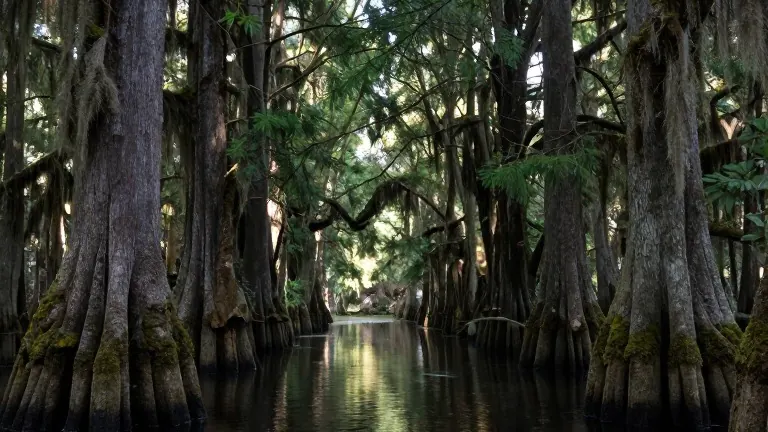
The southeastern United States once contained 40 million acres of old-growth cypress swamps. Today, the number stands between 10,000 and 12,000 acres.
National Geographic photographer Mac Stone has spent years documenting these remaining wetlands. His new book, "Cypress: The Last Old Growth Swamps," captures the few places where trees up to 3,000 years old still stand.
Stone describes these forests as distinct from other wetlands because of their age. The canopies are ancient, and the animal interactions beneath them have existed for centuries. He views the swamps as a glimpse of how the Southeast functioned before industrial logging took over.
The drastic reduction in acreage traces back to the turn of the 20th century. States sought to turn the land into productive agricultural zones. A federal decree known as the Swampland Act of 1850 incentivized states to drain and cut down swamps to make the land more usable.
Stone uses a technique called camera trapping to capture wildlife in these areas. He sets up elaborate systems with speed lights and strobes to create an outdoor studio. Animals trigger the beams to take their own photographs.
The process is difficult. In the tropics and South Florida, equipment faces rain, humidity, and hurricanes. Stone often checks the traps only after one or two months. Most of the time, he finds that black bears have demolished the systems. He lost six cameras while shooting the images for the book.
The book includes essays alongside the photographs. One essay states that the swamp will change a person. Stone explains that the environment challenges conventional ideas of beauty.
Walking through an old-growth swamp is hard. The ground is difficult to navigate, and visitors remain on alert. However, the area is packed with life. Stone sees snapping turtles, catfish, alligators, snakes, frogs, raccoons, orchids, and bromeliads everywhere he looks.
The sheer amount of life in these bottlenecks strikes Stone more than the grandeur of the trees. He says the experience changes a person's concept of what is inherently American and southeastern. The book serves as his love letter to these surviving ecosystems.
Corkscrew Swamp in Naples is one of the locations featured in the work. It represents the small fraction of the original 40 million acres that remains today.