Denmark Supreme Court to Rule on 40% Housing Mandate and 'Non-Western' Label
A decision this month could determine if the country's parallel societies law constitutes racial discrimination.
By Yasmin Nasser ·
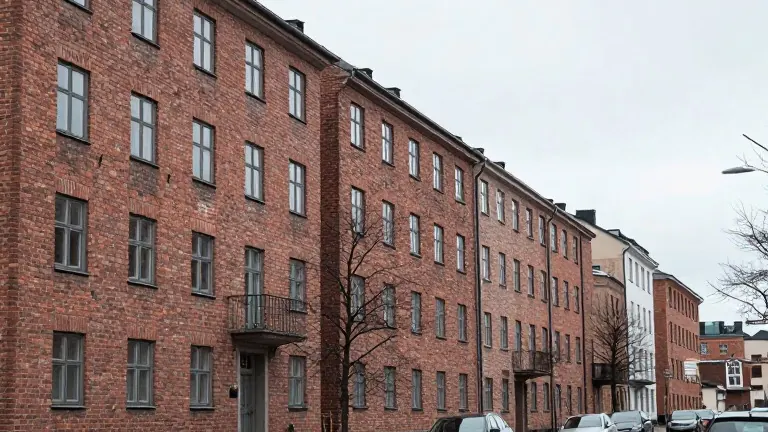
A split exists between Danish law and the practical application of the country's housing regulations regarding the definition of ethnicity. The Supreme Court of Denmark begins hearings on November 6 and 9 to determine if the state's use of the term "non-Western" background triggers protections under racial discrimination law. The outcome of this case will directly impact the legality of the legislation previously known as the "ghetto law," which mandates specific structural changes in designated neighborhoods.
The appeal stems from evictions in the Nøjsomhed-Sydvej neighborhood in Helsingør, a municipality located north of Copenhagen. Residents argue that their housing association forced them out to lower the percentage of people with a "non-Western" background. This reduction was intended to prevent the area from being classified as a "ghetto" under the law. The government has historically maintained that the classification is demographic rather than ethnic.
The legislation requires housing associations to reduce their not-for-profit housing stock by 40 percent by the year 2030. Authorities achieve this target by selling properties, demolishing structures, or terminating leases. In areas currently labeled "transformation zones," where at least half of the population has a "non-Western" background, the law mandates the demolition of apartment blocks. Neighboring districts with similar socioeconomic challenges, such as high unemployment rates, do not face these specific structural requirements.
Legal pressure on the policy has increased following a December ruling by the European Court of Justice. The EU court indicated that the Danish legislation may be unlawful. International bodies have also criticized the terminology. A report from the European Commission Against Racism and Intolerance published last month stated that authorities have not changed their approach to using the "non-Western" category in laws and administrative practices. The United Nations committee on the elimination of racial discrimination has urged Danish officials to drop the terms "Western" and "non-Western" from policy documents, citing a discriminatory impact on ethnic minorities.
The ruling will influence a separate, unresolved lawsuit filed in 2020 by residents of the Mjølnerparken estate in central Copenhagen. That group argues that using ethnicity to determine housing residency is illegal. More than 1,000 people have been forced to move from their homes under the law. The Mjølnerparken case has not returned to domestic courts since the European Court of Justice verdict in December.
Susheela Math, head of legal at the NGO Systemic Justice, stated that a ruling linking "non-Western" background to ethnic origin would raise major questions for the state. She noted that the government often refers to ethnic origin when convenient but denies collecting ethnic data in court settings. Math added that such a finding could force the state to consider abolishing the categorization entirely.
If the residents of Nøjsomhed-Sydvej win the case, they would be permitted to return to their homes. The court is expected to deliver a decision later this month. In contrast, returning to Mjølnerparken would be more difficult because their properties have already been sold. The Danish ministry of children, senior citizens, and housing was contacted for comment.