Israeli forces close Hebron mosque for holiday
Palestinian worshippers were barred from the Ibrahimi Mosque on Friday as thousands of Jewish visitors arrived for an annual observance.
By Dominic Foster ·
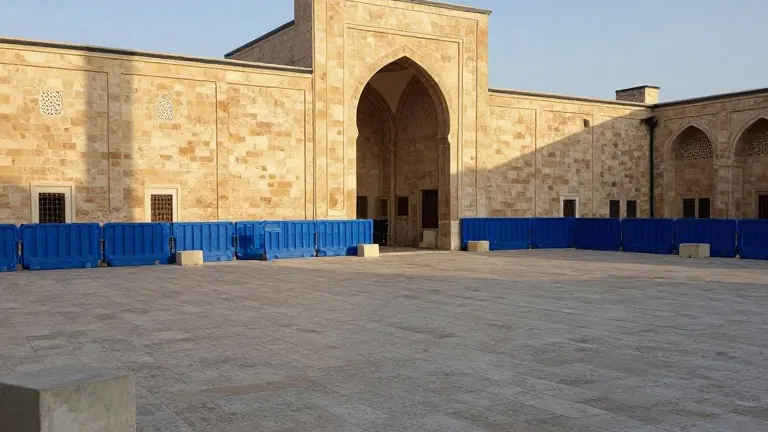
Israeli military forces blocked entry to the Ibrahimi Mosque in Hebron on Friday afternoon. The closure prevented Palestinian residents from entering the site during a Jewish religious holiday. Restrictions are scheduled to last until 10 p.m. on Saturday.
Moataz Abu Sneineh, the director of the mosque, said Israeli authorities planned to open the prayer halls and courtyards only to Israeli visitors. The Palestinian Ministry of Religious Endowments confirmed that both regular worshippers and staff were kept out. Because of the closure, the traditional call to prayer was suspended.
The timing matches an annual observance honoring Sarah, the wife of the Prophet Abraham. Tradition holds that she is buried at this location. Jews also refer to the site as the Cave of the Patriarchs. It is a holy place for both Muslims and Jews as the burial site of Abraham and his family.
Israeli troops tightened security checkpoints and restricted movement throughout Hebron’s Old City. These measures stopped some local residents from entering or leaving their homes. Israeli forces told The Jerusalem Post they expected about 20,000 visitors for the holiday. Hundreds of personnel were deployed to manage the crowd and maintain security.
This action follows a 1997 agreement between Israel and the Palestinian Authority known as the Hebron Agreement. That deal gave Israel security control over the Old City while the Palestinian municipality kept planning and construction powers. In June, Israeli Finance Minister Bezalel Smotrich announced a takeover of those municipal powers. The move reduced Palestinian oversight of the holy site.
The closure comes days after Israeli forces ended a ten-day siege of Hebron. During that period, hundreds of arrests were made. Fifteen homes were demolished, and more than 3,300 Palestinians were displaced. Israeli settlers have expanded their presence in the city, seizing Palestinian properties and establishing new outposts under military protection.