30 Seconds of Cold Air Ends Frizz
Stylists say a brief blast of cold air seals the hair cuticle, preventing moisture from re-entering the strand.
By Yasmin Nasser ·
Thirty seconds. That is the duration professionals recommend for a final burst of cold air after blow-drying. This specific timeframe is identified as the critical window to lock in a salon-style finish and eliminate flyaways.
The primary enemy of a polished hairstyle is frizz, a condition that typically emerges minutes after heat styling. The consensus among experts is that the solution does not rely on expensive chemical products. Instead, it involves utilizing a function on standard hair dryers that many users ignore.
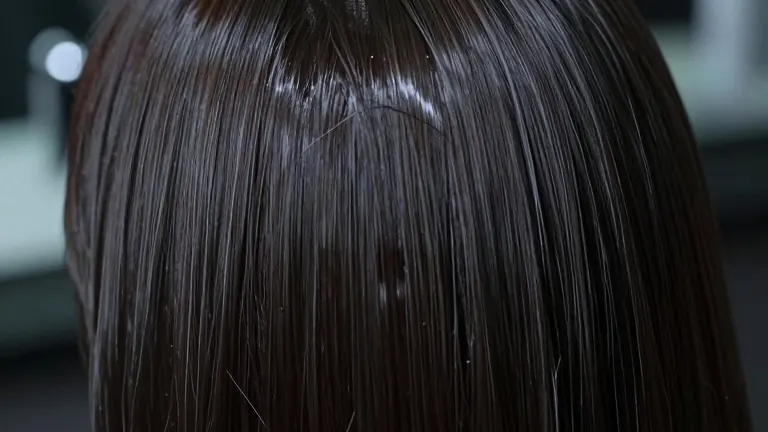
When hair is exposed to high temperatures, the outer layer, or cuticle, expands and opens. If the strand cools naturally at room temperature, ambient moisture easily penetrates this open structure. This absorption causes the hair to swell, resulting in static and frizz.
A directed stream of cold air creates an immediate thermal shock. This rapid cooling snaps the cuticles shut. Once sealed, the surface of the hair becomes smooth and flat. This smoothness blocks external moisture and reflects light uniformly, producing a natural shine that heat styling often diminishes.
The cold air acts as a switch, but it requires a final step for maintenance. Professionals advise applying a finishing product immediately after the cooling phase. For fine hair, a small amount is sufficient. Users should warm the product by rubbing it between their palms before application.
The product should be smoothed onto the ends and specific areas where frizz is most prominent. Stylists also note that certain habits undermine this technique. Drying hair upside down can reduce control over the shape. Additionally, pulling on dry tangles or using boiling water can damage the texture.
The process relies on physics rather than expensive additives. By closing the cuticle with cold air and sealing it with a light coating, the structure remains stable for longer periods. The result is a surface that resists humidity and maintains its shape without constant product reapplication.