Missing Mural: Art Institute Reconstructs Cassatt's 1893 World's Fair Masterpiece
Curators use archival records to recreate the 60-foot work that vanished after the 1893 fair, offering visitors a glimpse of the piece's original scale and meaning.
By Dominic Foster ·
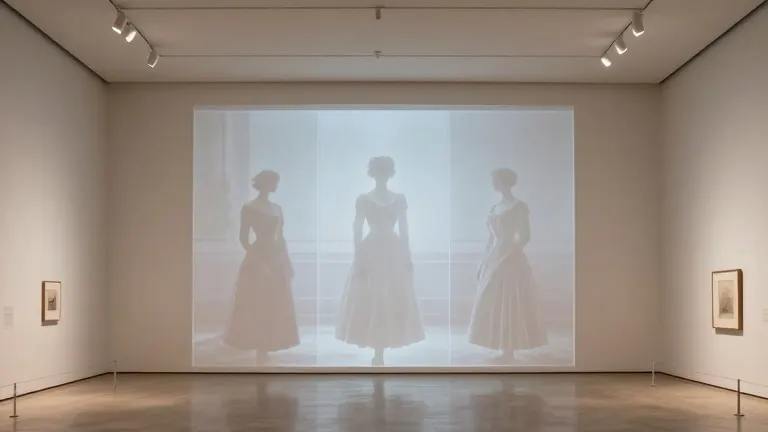
The Art Institute of Chicago is currently displaying a reconstruction of a massive painting that has been missing for over a century. The fall exhibition centers on the work of Mary Cassatt, focusing specifically on the mystery surrounding her triptych mural. The original piece has not been seen since 1912.
Cassatt, an American artist based in Paris, created the work for the Woman's Building at the 1893 World's Fair. The building was a major attraction at the event and featured exhibits on women's patents, innovations, and literary contributions. Cassatt's mural was installed in the main hall, positioned opposite a similar commission by artist Mary MacMonnies.
The physical scale of the work was considerable. The mural measured 60 feet in length and 14 feet in height. It consisted of three panels depicting well-dressed women engaged in various activities. One scene showed women chasing a figure representing fame. Another depicted women playing music. The central panel illustrated women tending to an orchard, a visual metaphor for the pursuit of knowledge and science.
Art historian Wanda Corn, a professor emeritus at Stanford University, described the work as a representation of the expanding roles for women in American culture. She noted that the piece symbolized the possibilities for women to become educated, artistic, and famous, mirroring Cassatt's own career trajectory.
After the fair concluded, the Woman's Building was demolished like most other structures at the site. The artwork was placed in storage. Curator Annelise Madsen stated that the last confirmed location for the mural was the Gold Coast mansion of the Palmer family on Lake Shore Drive. The residence was once the largest private home in Chicago before its demolition in 1950.
The trail goes cold around 1912. Records in the Art Institute's archives show that the museum director wrote a letter inquiring about unrolling the mural for a temporary installation. The correspondence ends without a resolution. Madsen explained that the paper trail stops with the director's question, and the mural was never returned to public view.
Speculation regarding the mural's fate includes damage from water or a fire. Corn expressed doubt that the work still exists, citing the extensive efforts by previous researchers to locate it. She stated that the evidence suggests the piece is lost.
The exhibition aims to bring the story back to life for visitors. The reconstruction serves as a historical document of Chicago's role in promoting women's art. Corn emphasized that 1893 marks a starting point for the history of women creating large-scale paintings. She noted that the era paved the way for future female artists to accept larger commissions.