Arab Voters Hold Key to 120 Contested Seats in Israel
Regional media analyze how the Joint List and Ra'am could determine the next Israeli government amid a projected parliamentary deadlock.
By Dominic Foster ·
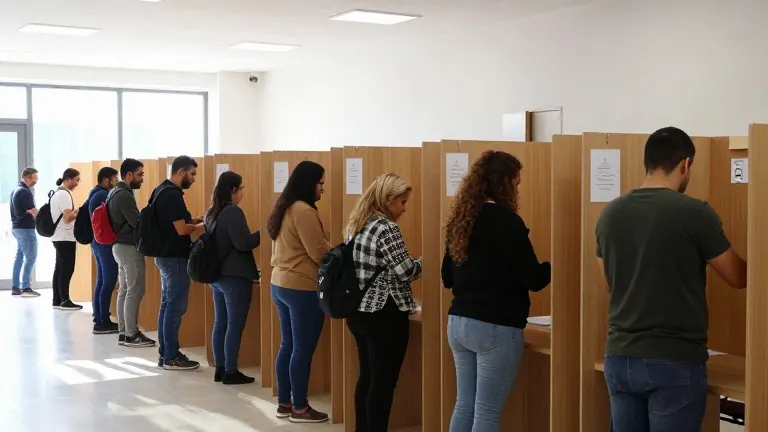
Voters in Israel face a decision that regional media suggest will hinge on the performance of Arab-led parties. With no major bloc guaranteed a majority, the outcome of the upcoming vote depends on how many of the 120 contested seats the Arab lists secure. Analysts in the region point to the Joint List and Mansour Abbas’s Ra'am party as the deciding factors in breaking the political deadlock.
Shadi Shweiri, a politician with the Hadash party, told Alghad TV on Sunday that Arab citizens face a difficult choice. He described the situation as selecting between the bad and the worse rather than the good and the better. Shweiri argued that the right to vote was a condition for Israel’s acceptance into the United Nations in 1948, not an act of goodwill by the government. He accused the current leadership of racism and called for a successor willing to halt military operations and improve economic conditions for Arab citizens.
The election takes place against a backdrop of continued tension between Israel and Iran. Esmail Baghaei, the Iranian Foreign Ministry spokesman, stated at a press conference on Monday that the election result makes no difference to Tehran. Baghaei criticized the process, describing it as a competition between groups to commit more evil. Despite this official stance, Iranian state-affiliated media, including the Tasnim News Agency, have published multiple polls analyzing the Likud party's chances of winning.
Beirut Hammoud, a Qatar-based Palestinian journalist, wrote an analysis for Al-Araby Al-Jadeed on Monday. She warned of a potential political stalemate that could leave Prime Minister Benjamin Netanyahu leading a caretaker government. Hammoud framed the vote as occurring after three years of what she described as genocide and ethnic cleansing. She noted that opposition politicians differ from Netanyahu only in their methods of managing the conflict, accusing him of leading a government of ruin.
Al-Khanadeq, a Lebanon-based outlet affiliated with Hezbollah, published an analysis on Monday arguing that Netanyahu’s campaign portrays the Arab vote as a liability. The article cited AI-generated campaign material showing Gadi Eisenkot alongside Mansour Abbas. The author claimed this strategy targets the soft right and aims to deter Jewish voters who want Netanyahu gone but hesitate at the idea of a government based on Arab partnership. The piece also mentioned efforts by the Central Elections Committee to disqualify Arab-majority parties and the deployment of 2,000 activists to deter voter turnout.
Dr. Ahmed Youseff, a former adviser to Hamas leader Ismail Haniyeh, wrote for the east Jerusalem-based site Al Quds. He noted that the timing of the Israeli election coincides with the United States midterms, a convergence that could reshape the region. Youseff argued that a victory for Eisenkot could reopen diplomatic efforts and force an accountability review for security failures. He stated that the true value of the election will be measured by whether it leads to policy changes that curb war and restore rights.
The Joint List, an alliance of Hadash, Ta'al, and Balad, and Ra'am are expected to play a central role in forming the next government. Shweiri told Alghad TV that Arab parties should not support just any candidate, but one willing to improve economic opportunities for Arab citizens. He emphasized that the right to vote was secured through international pressure. Baghaei said at a press conference that the outcome makes no difference to Iran. Hammoud wrote that opposition politicians differ from Netanyahu only in their methods of managing the conflict. The Al-Khanadeq analysis cited AI-generated images and the deployment of 2,000 activists. Youseff wrote that the American vote should curb Trump's drive toward confrontation.
The election is scheduled for Tuesday. Regional media continue to monitor the polls and the reactions of key political figures. The performance of the Arab lists will determine whether a stable majority can be formed or if the country faces a period of political uncertainty. The outcome will influence diplomatic efforts and regional stability. Voters are preparing to cast their ballots in a contest that observers say has high stakes for the future of the two-state solution and the balance of power in the region.
Source: The Jerusalem Post