
Artemis II launch linked to ionosphere gaps and GPS drift
Research indicates the April rocket ascent created atmospheric surges that could cause meter-scale positioning errors for autonomous systems.
By Dominic Foster ·
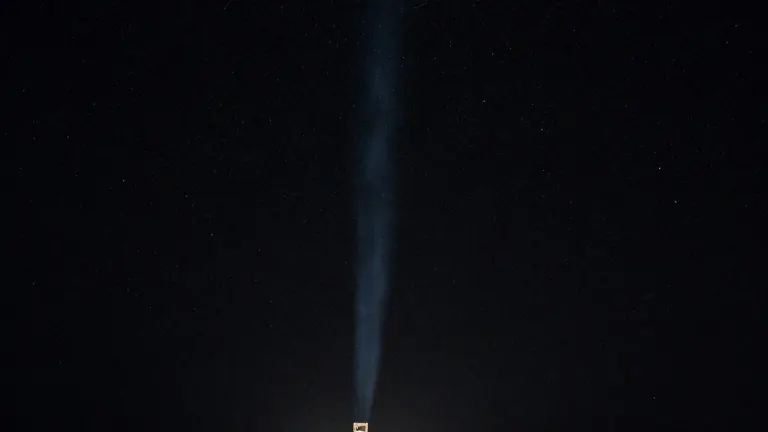
The April 1 launch of the Artemis II spacecraft from Florida may have temporarily altered Earth's upper atmosphere, according to a study published in Geophysical Research Letters. Researchers at National Cheng Kung University in Taiwan analyzed atmospheric data from the mission, which carried astronauts on a flight around the moon.
The study identified three distinct surges of perturbations in the ionosphere during the rocket's ascent. This region of the upper atmosphere extends from approximately 30 to 600 miles above sea level. The National Oceanic and Atmospheric Administration notes that the ionosphere reflects and modifies radio waves used for communication and navigation.
The observed changes in the ionosphere were equivalent to GPS positioning errors of several meters. Charles Lin, a researcher involved in the study, stated that a positioning error of a couple of meters is sufficient to cause an autonomous vehicle to change lanes. He noted that such shifts could affect the positioning accuracy of self-driving cars and drones.
Despite the measured drift, the study did not document any actual GPS failures, navigation disruptions, or accidents resulting from the launch. The findings identify potential disturbances in the signal rather than confirmed operational impacts on ground-based systems.
Lin suggested that these atmospheric effects could become more problematic as the frequency of powerful rocket launches increases. The data provides a specific record of how large-scale space missions interact with the layer of the atmosphere that supports global positioning technology.