
Pitt Team Teaches AI to Flag Its Own Medical Errors
New method uses uncertainty-weighted learning to improve breast cancer detection reliability.
By Yasmin Nasser ·
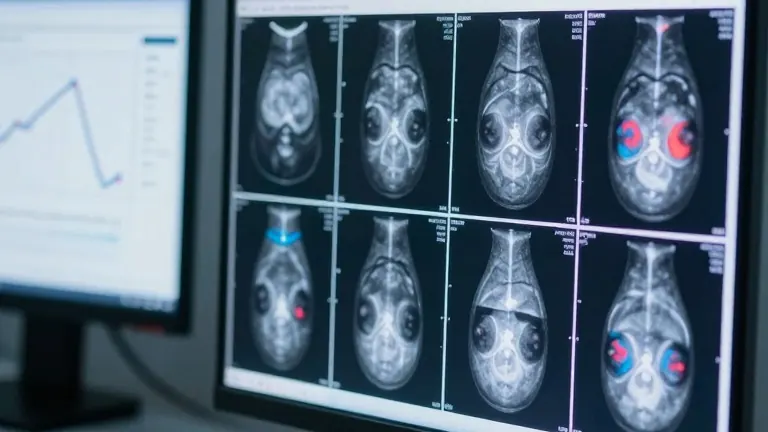
University of Pittsburgh researchers have developed a training method that forces artificial intelligence models to calculate their own error rates during medical diagnosis.
The team, led by radiology professor Shandong Wu, tested the technique on mammography images to detect breast cancer. The primary goal was to move beyond simple accuracy metrics and allow the models to express how confident they are in each specific result.
Three key components drove the study. First, the researchers integrated uncertainty quantification directly into a standard image classification model. This allows the AI to generate a probability score for how likely a prediction is to be wrong. Second, the team built a new evaluation metric to verify that these uncertainty scores actually match the model's real-world error rate. Third, they introduced a training process called uncertainty-weighted learning, or UWL, which forces the model to pay closer attention to data points where it is most likely to fail.
Wu, a researcher at the Center for Artificial Intelligence Innovation in Medical Imaging, stated that traditional AI systems typically provide a diagnosis without indicating how reliable that diagnosis is. He noted that this lack of self-assessment is a major concern in clinical settings where stakes are high. By using a public dataset known as CBIS-DDSM, the team compared models trained with UWL against baseline models that lacked this feature.
The results showed that UWL improved the alignment between the estimated uncertainty and the actual prediction errors. Wu said the method enabled more accurate estimates of the likelihood that a specific AI prediction for an individual patient could be incorrect. This shift allows doctors to better understand when a machine's output requires human verification.
Na Du, an assistant professor of informatics and networked systems, added that AI is becoming a central part of interdisciplinary research at the university. She emphasized that the goal is appropriate trust, where users understand when a system is useful and when it might be wrong. Du noted that technical capability is only half the equation; the system must also work effectively with human operators.
Wu said the study establishes a new benchmark for evaluating clinical AI. He argued that models should be judged not just on how often they are right, but on how reliably they identify when they are potentially wrong. The team plans to expand these methods to other medical imaging tasks to further test the robustness of the uncertainty-weighted approach.