Canada seeks EU associate status
Leaders in Montreal pledged to deepen digital and security ties, aiming to confirm the new partnership details by June.
By Dominic Foster ·
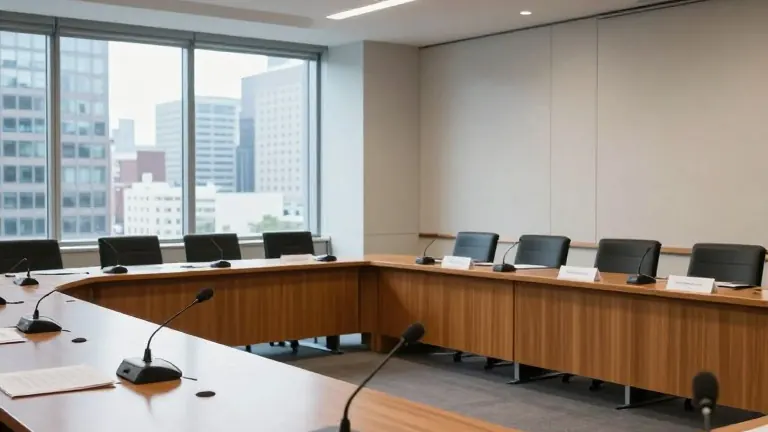
Canadian residents will soon gain easier access to European supercomputers and a new pathway for sending money abroad. These changes stem from a two-day summit in Montreal that concluded Friday, where leaders agreed to expand cooperation in digital trade and border security. The accord also integrates Canada into the European Union’s defense procurement program, a move that marks a shift in how the two entities handle military spending.
The agreement includes a digital trade pact that adds specific sectors to existing rules. It also facilitates Canada's entry into the EU’s instant payment systems. In the education sector, a youth mobility partnership will build on current university exchanges and working holiday schemes. The European Investment Bank plans to fund projects mining critical raw materials within Canada, a key area of economic focus for the summit.
Prime Minister Mark Carney, European Commission President Ursula von der Leyen, and European Council President Antonio Costa issued a joint statement on Friday afternoon. All three leaders used the term "associate member" to describe Canada's future role in the bloc. European Council President Antonio Costa called Canada "the most European of the non-European countries" during the discussions. Negotiations on the specific terms of this association will continue into the spring, with Carney hoping to finalize details by June.
Reaction to the "associate member" label has been mixed. Some EU nations, led by Germany, have expressed discomfort with the terminology. Canadian Conservatives criticized the summit as a distraction from domestic issues. Former Canadian ambassador to the EU, Kinsman, described the event as the most significant Canada-EU summit in years. He noted that the title validates the EU's view of Canada as a premier non-member partner.
Former Conservative MP Axworthy raised questions about reciprocity in the new deals. He pointed out that while Canadian students would be invited to Europe, the terms for European students coming to Canada remained vague. Axworthy warned that the arrangement could leave Canada providing more natural resources without balanced returns. He also noted that concerns over artificial intelligence and migration were largely absent from the talks.
EU High Representative Kaja Kallas framed the partnership as a response to a destabilized international order. She stated that the alliance is not against any specific country but is meant to strengthen shared rules-based systems. Canadian Minister Anand emphasized that the move supports Canada's strategic autonomy. Both leaders agreed the relationship goes beyond a reaction to recent U.S. tariff disputes. Canada will also join an EU loan program for Ukraine, further aligning its foreign policy with European priorities.
The summit concluded with a focus on long-term structural ties. Leaders agreed to work on joint AI regulations and competition policies to curb anticompetitive business practices. The EU’s border agency will share data with Canadian counterparts to combat migrant smuggling and identity fraud. The final statement outlined a path toward "association without accession," a phrase that captures the unique legal status Canada is pursuing with its European neighbors.