Data center spending tops $195M in Maine Senate race as voters weigh utility costs
Campaign finance records show nearly $200 million in spending, driven by tech donors, while 76% of Mainers oppose local data centers.
By Yasmin Nasser ·

The Maine Senate race will cost more per voter than any previous contest in United States history, with total spending projected to reach $195 million in the final days before the election. Democrats are expected to spend $81 million, while Republicans will spend $114 million. Much of this funding comes from the technology and data center industries that rural voters have actively opposed since the spring.
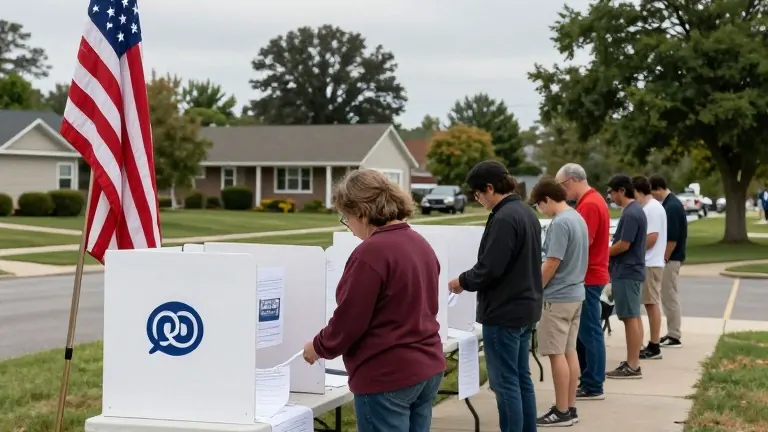
The high cost of the campaign reflects a sharp divide in the state over the rapid expansion of artificial intelligence infrastructure. In a September poll conducted by UMass Lowell and YouGov, 76 percent of Mainers said they oppose building a data center in their community. Of those respondents, 58 percent were strongly opposed. The sentiment was visible at a campaign event where Republican Sen. Susan Collins was challenged by an audience member who shouted that AI data centers were destroying the climate and poisoning local water.
Collins, who chairs the Senate Appropriations Committee, has secured $6.2 million in federal funding for a high-performance computing hub in central Maine. She has also received $325,644 from AI and crypto donors, according to a tracker maintained by Molly White of Tech Influence Watch. White notes that the spending patterns in this midterm election mirror the heavy financial influence of the cryptocurrency industry in 2024. Major donors to Collins include Alex Karp of Palantir, Marc Andreessen and Ben Horowitz of Andreessen Horowitz, and executives from Google, Meta, and Microsoft.
The financial stakes extend beyond individual candidates. Elon Musk donated $158 million to the Senate Leadership Fund this summer. His America PAC has spent approximately $2.1 million in Maine. A recent Federal Election Commission report indicates that Musk’s corporate SpaceX PAC provided $55,000 to Collins’ Victory Committee in August and $50,000 to the Pine Tree Results PAC. Stephen Schwarzman of Blackstone donated $2 million to Pine Tree Results, a super PAC with personal ties to Collins and her husband, Thomas Daffron.
Daffron holds an estimated $300,000 to $800,000 in AI and data center linked investments, ranking the Collins household fifth in the Senate for such holdings. He was paid consulting fees in 2025 by a lobbying firm that represented a data center developer in Maine. In contrast, Democratic challenger Troy Jackson, a former logger, has reported assets worth between $147,000 and $430,000. Jackson has no reported financial ties to data centers or Big Tech, though he has pledged to ensure union jobs for data center construction and maintenance.
The opposition to data centers is rooted in local economic concerns. Many Mainers are facing record high heating oil costs this fall and fear that new facilities will further raise utility prices. Mark Brewer, who chairs the political science department at the University of Maine, points out that data centers rarely create the long term employment associated with the state’s historic timber and paper industries. Brewer notes that while a paper mill might employ 1,000 workers on three shifts, data centers do not offer similar labor structures.
Nicholas Jacobs, director of the Public Policy Lab at Colby College, describes the voter skepticism as a response to extractive economic models. He argues that residents worry about wealth being removed from rural communities without sufficient local benefit. This concern is compounded by the lack of transparency in data center ownership and the limited long term job guarantees offered by developers.
The state Legislature passed a bill in April that would have established the nation’s first statewide moratorium on large data centers. Governor Janet Mills vetoed the measure ten days later. Since then, numerous towns have adopted temporary bans or placed data center questions on local ballots for November. The outcome of the Senate race will help determine which party controls the federal legislature and will influence national policy on AI infrastructure.