Iran seeks permanent war end as US midterms approach
Tehran insists on sanctions relief and naval blockade removal, citing distrust of Washington ahead of November elections.
By Dominic Foster ·
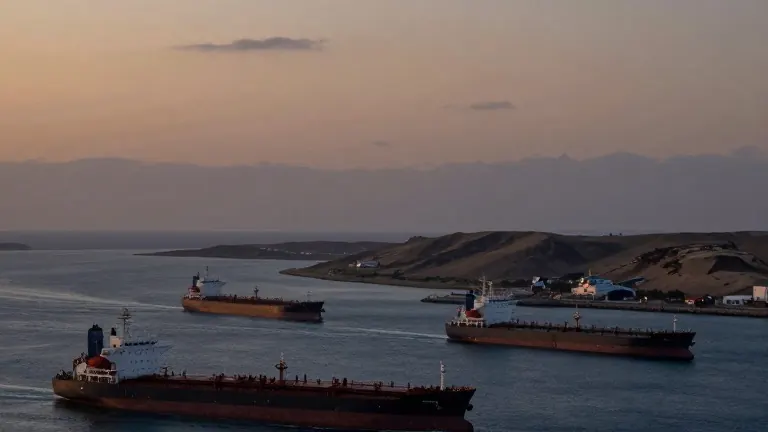
The eight-month war between the United States, Israel, and Iran has disrupted global energy markets and strained regional alliances. Tehran is now demanding permanent security guarantees rather than a temporary ceasefire, a stance that complicates ongoing diplomatic efforts.
Chinese officials announced on Tuesday that Beijing will dispatch an envoy to the region to help prevent further escalation. This move follows a meeting on Monday in Tehran where senior leaders from Saudi Arabia, Pakistan, and Turkiye discussed peace and security with Iranian officials. The three Gulf nations signed a joint defense pact in August, committing to support one another militarily.
Iran maintains that its priority is ending the war permanently to establish deterrence against future attacks. Negotiators in Tehran are demanding an end to US sanctions, the removal of the naval blockade on Iranian ports, and written guarantees that Washington will not resume strikes. In return, Iran offers to help restore normal traffic through the Strait of Hormuz.
The United States seeks broader concessions, including specific limits on Iran’s nuclear program, before agreeing to a final settlement. Experts attribute Iran’s hard line to a lack of trust following three separate US strikes since June 2025. The first attacks began on February 28, while peace talks were ongoing in Oman. A June memorandum of understanding aimed at reopening the strait collapsed when both sides resumed hostilities in July.
Sina Toossi, a senior fellow at the Center for International Policy, noted that the failure of the previous arrangement hardened Tehran’s position. Iran believes prior ceasefires failed to protect it from renewed military pressure and now seeks more durable guarantees. Mohsen Rezaei, secretary of Iran’s Supreme National Security Council, stated last week that Iranian forces are prepared to respond to new attacks by hitting US military bases in neighboring countries.
US President Donald Trump remains ambiguous about his next move, asking reporters on Sunday whether he would make a deal or finish the conflict. He previously indicated that major strikes would wait until after the US midterm elections on November 3. The timing is critical for Washington, as the war has become a contentious domestic issue.
A Reuters and Ipsos survey from earlier this month showed that only 34 percent of Americans approve of Trump’s handling of the conflict, his lowest rating in either term. Republican majorities in Congress are thin, with a 53 to 47 split in the Senate and 218 to 214 in the House. The war has also driven diesel prices nearly to double their pre-war levels, adding to inflation concerns for farmers and small businesses.
In Israel, an election is scheduled for Tuesday. A defeat for Prime Minister Benjamin Netanyahu could complicate joint military operations with the US, as he was a primary advocate for the current campaign. Former military chief Gadi Eisenkot leads the opposition and has expressed concerns about Iran’s nuclear program, though analysts suggest his victory would not necessarily soften Israel’s stance.
Iran’s leverage over the Strait of Hormuz remains a central bargaining chip. The waterway carried about one-fifth of global energy supplies before the war began. October recorded the highest number of attacks on commercial shipping in the area, according to the Washington Institute for Near East Policy. Brent crude prices rose above $117 per barrel last week, compared to roughly $72 before the conflict.
Chris Beauchamp, chief market analyst at IG Group, said Iran is exploiting this economic pressure in a contest of endurance. Tehran believes it can outlast Washington economically, keeping attacks on shipping to push prices higher. The main obstacle to a settlement remains Iran’s skepticism of American commitments after two wars, according to Negar Mortazavi of The Iran Podcast.