Danish Housing Law: Supreme Court Weighs Racial Bias
A ruling on the 'parallel societies' legislation could determine if the 'non-western' classification violates anti-discrimination statutes.
By Dominic Foster ·
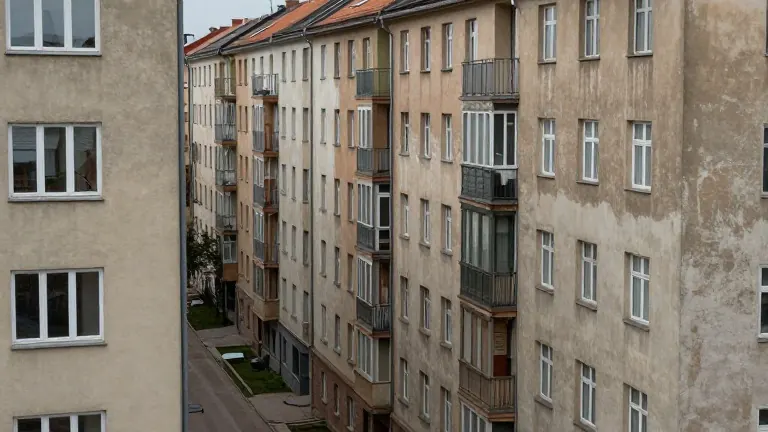
The Danish Supreme Court is scheduled to hear arguments on Friday and Monday regarding whether the state's use of the term 'non-western' constitutes racial discrimination under current law. The case stems from the eviction of residents at Nøjsomhed-Sydvej in Helsingør, a municipality north of Copenhagen. The court is expected to deliver a decision later this month.
The residents argue that their housing association evicted them to reduce the number of people with a 'non-western' background. Their goal, according to the plaintiffs, was to prevent the area from being designated as a 'ghetto' under controversial legislation. The government has previously maintained that the classification is not tied to ethnicity, despite the specific demographic criteria used to identify affected neighborhoods.
The law, formerly known as the ghetto law and now referred to by the government as the parallel societies legislation, imposes strict requirements on housing associations in designated areas. It mandates a 40% reduction in not-for-profit housing stock by 2030. This reduction must be achieved through the sale or demolition of properties or the termination of tenant leases. The measures apply specifically to areas where at least half of the residents have a 'non-western' background, a criterion that excludes other neighborhoods with similar economic indicators such as high unemployment or crime rates.
International scrutiny of the policy has intensified in recent months. In December, the European Court of Justice ruled that the legislation may be unlawful. Last month, the European Commission Against Racism and Intolerance published a report stating that there has been no positive change in how authorities use the 'non-western' category across various laws and administrative practices. The United Nations committee on the elimination of racial discrimination has also called for Denmark to stop using the terms 'western' and 'non-western' in policy, citing a discriminatory impact on ethnic minorities.
Susheela Math, head of legal at the NGO Systemic Justice, noted that a ruling linking 'non-western' background to ethnic origin would raise major questions for the Danish state. She said, 'If the supreme court decides that ‘non-western’ background is linked to ethnic origin and racial discrimination law, that raises huge questions for the Danish state.' Math added that the government often refers to ethnic origin when convenient but claims in court that 'non-western' background is unrelated to ethnicity.
The outcome of the Nøjsomhed-Sydvej case could influence a separate lawsuit filed in 2020 by residents of the Mjølnerparken estate in central Copenhagen. More than 1,000 people have been forced to move due to the legislation. While a victory for the Helsingør residents would allow them to return to their homes, a win for the Mjølnerparken group would be more complicated because their properties have already been sold.
The Danish ministry of children, senior citizens, and housing has been contacted for comment on the upcoming ruling.
More Business · Rip-Off Report · Report a business · Got a Story?