Israel's Arab-led parties win 19 seats, blocking Netanyahu's majority
Record turnout among Palestinian citizens of Israel leaves both major coalitions short of the 61 seats needed to govern, forcing complex negotiations.
By Dominic Foster ·
Palestinian citizens of Israel turned out in record numbers for the recent general election, a shift that has altered the political balance in the Knesset. Arab-led parties secured 19 of the 120 seats, a result that prevented both Prime Minister Benjamin Netanyahu and his challenger Gadi Eisenkot from reaching the 61-seat threshold required to form a government. According to the Central Elections Committee, these parties saw a 64 percent increase in votes compared to the previous cycle. This surge has positioned them as a decisive factor in the upcoming coalition talks.
Jamal Zahalka, chairman of the High Follow-Up Committee, described the outcome as a historical achievement for the community. He stated that the turnout effectively blocked the continuation of Netanyahu's government. The election results have intensified long-standing debates regarding Israel's self-definition and the role of its Palestinian population, which constitutes approximately 20 percent of the country's residents. Many voters cited worsening rights and discrimination since the October 7, 2023 attacks as primary motivations for participating.
Netanyahu and his allies reacted to the results with accusations of irregularities. On election day, the prime minister labeled the high turnout an emergency, while National Security Minister Itamar Ben Gvir urged voters to ensure the country remained Jewish and Zionist. The Likud party subsequently claimed that Arab parties had stolen the election through bribery and forgery, though it has not published evidence to support these claims. Police and election officials have reported no widespread fraud, and the head of the elections committee confirmed the vote was conducted properly.
Eisenkot faces a difficult path to power, as an alliance with Arab parties is politically risky for his center-right bloc. His supporters view such a partnership as necessary to secure a majority, but other right-wing members may split off in protest. Eisenkot himself, a former military chief of staff whose son was killed in Gaza, has a hawkish reputation. He previously formulated the Dahiyeh doctrine, which advocated for using disproportionate force against militant areas.
The Arab parties themselves are divided on how to proceed. Ra'am, a socially conservative Islamist party, campaigned on joining the governing coalition. In contrast, the Joint List, which won 11 of the 19 seats, has stated it will not formally partner with Eisenkot due to the ongoing war in Gaza and the occupation of the West Bank. Leaders of the Joint List indicated they might support his government from the outside.
President Isaac Herzog is currently consulting with various parties to determine who will lead coalition negotiations. He is expected to announce a mandate recipient next week. That candidate will have 28 days to form a government, with the option for a two-week extension. If negotiations fail, a second candidate gets 28 days without an extension. If no coalition is formed, Israel will hold repeat elections next year.
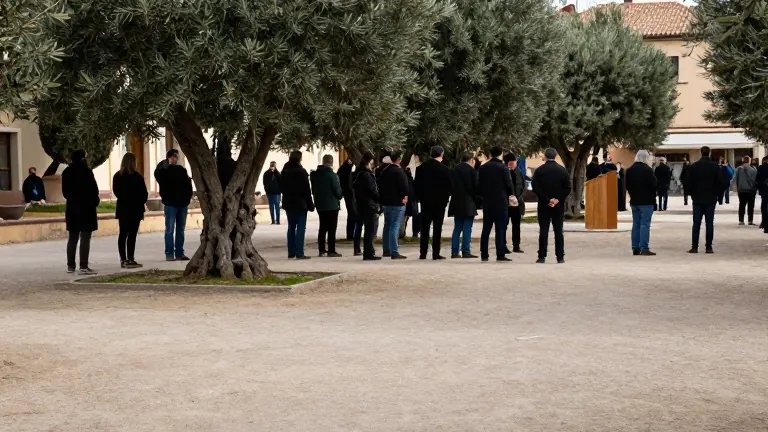
In the town of Kufr Qasim, residents gathered to commemorate the 1956 killings of local residents by Israeli border police. Speakers at the event noted that 70 years later, the struggle for rights continues. Intisar Sarsur, 65, said her family participated in the election to seek basic human rights. She described the recent olive harvest as bittersweet due to attacks on West Bank farmers, a sentiment shared by many who see voting as a tool to counter the influence of the extreme right.