Pawlikowski releases final film in historical trilogy
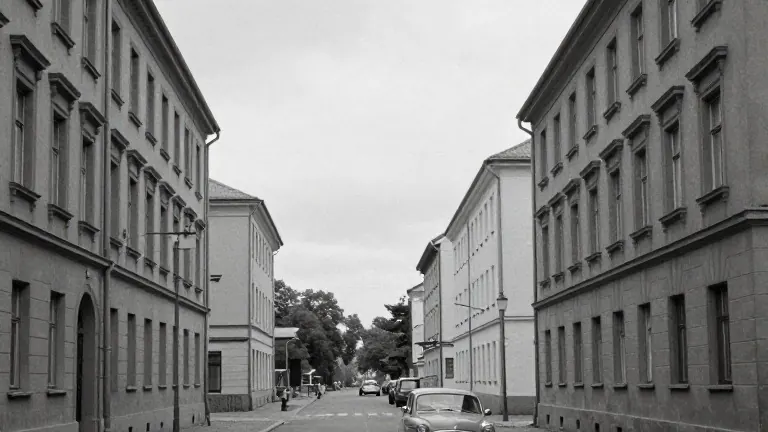
The black-and-white drama follows the Mann family through a divided Germany in 1949.
By Dominic Foster ·
Pawel Pawlikowski has released “Fatherland,” the final installment in a trilogy of historical films that includes “Ida” and “Cold War.” The new picture examines the tension between politics and art through the lens of a family separated by the Cold War.
The film opens in the summer of 1949. Klaus Mann, portrayed by August Diehl, sits on a dirty floor in a room strewn with drugs. His lover sleeps nearby as he speaks by telephone with his sister, Ericka, played by Sandra Hüller. Ericka attempts to convince Klaus to return to Germany briefly for a ceremony honoring their father, Thomas Mann, who has received a Goethe Prize.
Klaus resists the invitation. He fled Germany because of his hatred of the Nazis, but he remains German by birth. Since the end of World War II, the country has been split between American and Soviet control. The central question facing the family is which side they belong to. Klaus asks derisively whether it is a choice between Stalin or Mickey Mouse.
Thomas Mann, played by Hanns Zischler, returns to Germany after 13 years of exile in the United States. West Germany welcomes him warmly. He creates a stir by announcing he will cross the border into East Germany to accept his award in Weimar, the city where Goethe lived and died. He defies journalists who warn him that he may not be allowed back into the U.S. if he visits the East. Thomas maintains that art has no borders.
The narrative follows Thomas and Ericka on a road trip through the divided country. The film is characterized by black-and-white cinematography and long moments of stillness. The direction is restrained, focusing on subtle facial expressions and light rather than rapid action. Emotion surfaces only rarely, often in sudden eruptions.
The journey highlights the political nature of art in both sectors. In West Germany, a group of young men sings a rowdy drinking song outside Ericka’s window after she learns of Klaus’ fate. She calls them fascists and murderers. In East Germany, the music controlled by the Soviets is described as more choral and formal. Thomas’ belief that art transcends political lines is tested repeatedly.
Thomas insists on continuing the trip despite the terrible news about Klaus. This decision wounds his daughter, pitting his civil but stubborn demeanor against her simmering stillness. Thomas tells Richard Wagner’s grandsons at a party that their father’s theater should be burned to the ground, suggesting his own complex relationship with German culture.
The film concludes with Thomas and Ericka finding a shared sense of belonging in each other. They recall Klaus’ appreciation for Bach, whom he considered the only artist who made life worth living. This connection, which has no political affiliation, provides the emotional core of the story. The final moments show the father and daughter breaking down, holding onto one another.
“Fatherland” serves as the closing entry in Pawlikowski’s exploration of history and identity. The film uses the specific circumstances of the Mann family to explore the concept of home in a nation that no longer exists in its previous form.