Trump Ties Federal Spending to Midterm Election Outcomes
The president has linked disaster relief, veteran benefits, and energy policy changes to Republican wins in key states.
By Yasmin Nasser ·
President Donald Trump has linked specific federal benefits to the outcome of the November midterm elections, telling voters in multiple states that Republican victories are a prerequisite for continued aid.
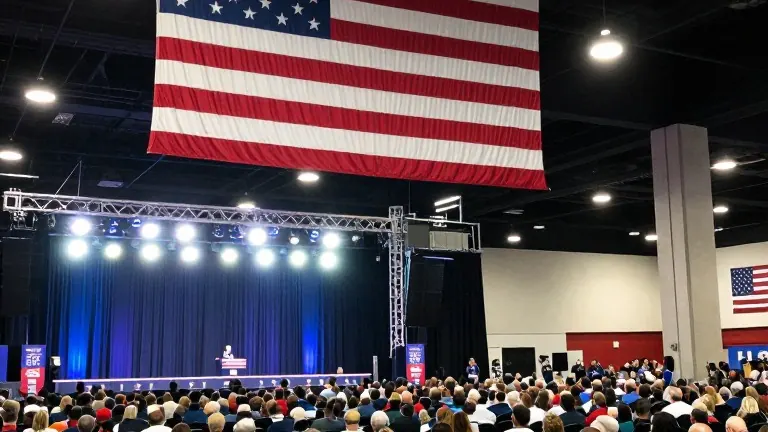
During a rally in Perry, Georgia, last week, Trump stated that he would be more responsive to requests from a Republican Senate winner than from Democratic Sen. Jon Ossoff. He referred to Ossoff as “Pee-wee Herman” and said, “I don’t give a damn what he wants,” if Ossoff were reelected.
The president has used similar language in North Carolina, Ohio, and Kansas. In Greenville, North Carolina, earlier this month, Trump announced that $1 billion in cash settlements related to Camp Lejeune water contamination had been delivered. He added that the Justice Department would settle remaining claims expeditiously only if Republicans won both chambers of Congress. He stated, “So, if we don’t win, there’s no money. If we do win, you’re getting it.”
In Park City, Kansas, Trump told a crowd that he would make year-round sales of E15 ethanol-blended gasoline permanent if GOP Sen. Roger Marshall retained his seat. He said he would not do so if Democrat Adam Hamilton won. The Environmental Protection Agency currently grants temporary waivers for this policy, though legislation to make it permanent exists in Congress.
In Vandalia, Ohio, Trump said he was less likely to assist Democratic gubernatorial candidate Amy Acton because he did not know her. He noted that “you have a lot of power over states” when serving as president and suggested that personal rapport influences federal support.
Ossoff called the strategy a losing tactic for Trump to insult voters while reminding them of higher costs. The White House defended the approach, with spokesman Davis Ingle stating that Trump wants a Republican majority to deliver on his agenda. Ingle argued that Democrats have not presented a clear plan to improve lives.
The Camp Lejeune remarks drew criticism from Jill Steen Dilgard, whose father served at the base and was diagnosed with cancer. She told The Associated Press that conditioning care on election results was “totally unacceptable.” She said the comments made her “physically sick” and “infuriated,” describing the move as an attempt to bribe voters.
Roy Cooper, the Democratic challenger to Trump’s preferred candidate Michael Whatley in North Carolina, described the threats as “insulting and frustrating.” Cooper’s campaign has pressed Whatley to denounce the remarks, though Whatley said in a local interview that supporting affected veterans is a priority.
In Kansas, Hamilton’s campaign avoided direct attacks on Trump. Spokesman Tyson Brody noted that Marshall served ten years in Congress without passing year-round E15 legislation. Brody said Hamilton would work with anyone to deliver on priorities for Kansas.
In Ohio, Acton’s spokesperson Addie Bullock said the candidate is committed to working with all parties to improve conditions for working Ohioans. Trump maintained in Georgia that having allies call him makes a practical difference in how he allocates resources.