
Antarctic penguin deaths caused by cholera, not flu
Researchers found over 537 carcasses on a single landing ramp, identifying a bacterial outbreak that had gone undetected for 25 years.
By Dominic Foster ·
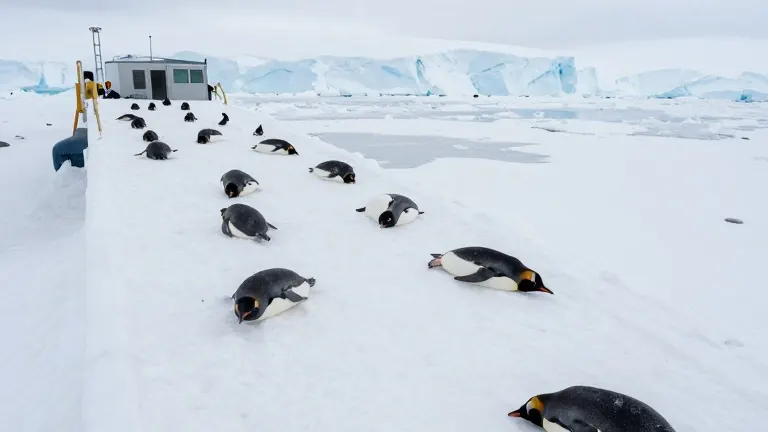
More than 537 Adélie penguin carcasses lay scattered across a single landing ramp in the Danger Islands, a stretch of snow estimated by researchers to be the size of an airport runway.
Dr. Ralph Vanstreels, a wildlife veterinarian at the University of California, Davis, and his team discovered the dead birds during a March 2024 expedition. They had sailed to the islands off the Antarctic Peninsula expecting to find victims of high pathogenicity avian influenza, which had swept through the region in late 2023.
The team found thousands of dead Adélie penguins and other bird species across the two mega colonies on the islands, though they could not complete a full count due to time constraints and the threat of icebergs blocking their exit. Vanstreels noted that the researchers had to move quickly to avoid being trapped by shifting ice.
Initial samples collected from the fresh carcasses showed low viral loads for bird flu, suggesting the virus was not the primary cause of death. The team returned to the Netherlands for further analysis, where microscopes revealed bacteria in the penguin tissues rather than viruses.
The investigation identified avian cholera as the culprit, a disease distinct from human cholera. The findings were published in October in the Proceedings of the Royal Society B. Vanstreels stated that the risk to humans remains low because the avian strain is distinct from the mammalian strain, but the bacteria thrive in cold environments and kill birds worldwide.
Scientists had not actively looked for avian cholera in the Antarctic Peninsula for 25 years, raising the possibility that similar die-offs have occurred regularly without detection. Dr. Amandine Gamble, an assistant professor at Cornell University, pointed out that the strain found in Antarctica is genetically very close to a strain found 5,000 miles away on Île Amsterdam in the Southern Indian Ocean.
The outbreak highlights the connectivity of Antarctica to the rest of the globe. While the continent is governed by the Antarctic Treaty, which has 58 parties including the U.S., France, Japan, and Russia, no single government controls the region. Gamble emphasized that international collaboration is necessary to track pathogens that travel great distances and ignore political borders.